
Introduction
This research discusses green energy cooperation between the two countries with the highest emission levels in the world, namely the United States and China, during the years 2021-2024. This cooperation played a strategic role in accelerating the energy transition from fossil fuel sources to cleaner and more sustainable renewable energy. In facing the challenges of climate change and increasing energy needs, international cooperation in developing green energy is becoming increasingly crucial. Green energy offers a sustainable solution that is environmentally friendly and has the potential to reduce dependence on fossil fuels that contribute to pollution and global warming (Androniceanu & Sabie, 2022). Examples of green energy include solar and wind energy (Daaboul et al., 2023). Another green energy source includes hydropower (Ullah & Lin, 2024) and Biomass (Ali et al., 2022), alongside geothermal energy, which originates from the Earth's internal heat (Dashti & Korzani, 2021).
Green energy investment offers environmental, social, and economic benefits, strengthening a nation's global market position and potentially altering geopolitical power dynamics (Qing et al., 2023). It is crucial for combating climate change and reducing greenhouse gas emissions. Establishing bold green targets can position a nation as a leader in the green economy, impacting global trends (Hassan et al., 2024). International cooperation is key to driving the transition towards green energy, including sharing knowledge, technology, and best practices in renewable energy development. Initiatives like the Paris Agreement provide a platform for states and non-state actors to commit to emission reductions and promote transformative change (Alam et al., 2024).
China and the United States, as the two largest economic powers in the world, play a key role in the global green energy transition. The Global Carbon Atlas report reveals that the leading emitter countries contribute significantly to global CO₂ emissions. For example, China is responsible for 30.9% of all CO₂ emissions, the US for 13.5%, India for 7.3%, Russia for 4.7%, and Japan for 2.9% (X. Wang et al., 2024). Recently, both countries have shown significant progress in the investment and development of green energy. China has emerged as a global leader in renewable energy investment, accounting for 50% of the total growth in clean energy investment in 2023, while the United States made a 20% contribution (Cozzi et al., 2024). China is committed to reaching peak carbon emissions before 2030 and carbon neutrality by 2060, demonstrating China's significant ambition to dominate the renewable energy sector (Myllyvirta, 2023).
Given the significance of transitioning to green energy, the two leading economies in the world have made ongoing efforts to implement this shift, as highlighted in previous research (Danish & Ulucak, 2021; Wu et al., 2022; Usman et al., 2023; Ullah et al., 2023; Xue et al., 2024; Y. Wang et al., 2024; Kilinc-Ata & Proskuryakova, 2024; Cifuentes-Faura et al., 2024). However, there is a notable lack of studies that focus on the cooperation between these two countries. Although the potential for collaboration was examined in 2014, that study was limited to future prospects and did not address both the opportunities and challenges involved (Zhang et al., 2014). Consequently, this research presents novel insights into the opportunities and challenges associated with green energy cooperation between the United States and China during the period 2021–2024. This research answers the question of how green energy cooperation between the United States and China would play out in the period 2021-2024 by first exploring the factors that drive opportunities for cooperation and identifying specific areas for collaboration, followed by an analysis of the challenges associated with such cooperation.
Conseptual Framework
This research employs the concept of liberal interdependence, as introduced by Robert Keohane and Joseph Nye, who posit that in the era of globalisation, interstate relations are shaped not solely by power conflicts but also by complex interdependence across various sectors, including the economy, technology, and environment. Keohane and Nye (2012) explain that "complex interdependence means there are many ways societies interact, no single issue is more important than others, and the use of military force is decreasing" (Keohane & Nye, 2012). In the context of green energy cooperation between the United States and China, this interdependence is evident in their mutual need to reduce carbon emissions, expedite the energy transition, and foster environmentally friendly technological innovations. Despite ongoing geopolitical tensions, both nations continue to collaborate through mechanisms such as the U.S.-China Climate Working Group and institutions like the Environmental Protection Agency (EPA), which has entered into a Memorandum of Understanding with China’s Ministry of Ecology and Environment (Ewing, 2021).
Liberal interdependence suggests that increased interconnection between countries encourages cooperation and reduces conflict. US-China green energy cooperation, despite technological competition and disputes in the South China Sea, exemplifies this principle. The COP26 agreement demonstrates sincere efforts to reduce emissions and transition towards renewable energy sources (Climate Watch, 2024). Non-state actors, including tech firms and environmental organisations, also play significant roles in this complex interdependence framework. The private sector's active involvement in clean energy development demonstrates a broader range of participants (Dugis, 2016). This conceptual framework also reinforces the notion that cooperation based on interdependence is not devoid of challenges. Philippe Martin et al (2023) illustrates that economic interdependence does not necessarily prevent conflict when political and security interests predominate. Studies in international relations categorise environmental issues as low politics (Zahran & Alfajri, 2023). Consequently, within the context of US-China green energy cooperation, the classification of environmental issues as low politics facilitates greater opportunities for collaboration rather than rivalry.
Employing the framework of liberal interdependence, this research examines green energy cooperation as both an instrument of environmental diplomacy and a mechanism for managing global interdependence amid geopolitical rivalry. This analysis suggests that cooperation arises not only from ideological similarities but also can flourish from shared strategic and pragmatic needs. As Jackson & Sørensen (2013) note, liberal interdependence emphasises that "cooperation can emerge from mutual benefits and shared interests," particularly when tackling transnational challenges such as climate change.
Methods
This research adopts a descriptive qualitative approach, employing a case study method to explore the dynamics of green energy cooperation between two countries or regions. The aim is to gain an in-depth understanding of phenomena through the interpretation of non-numeric data (Creswell, 2009). As noted by Arikunto (2013), research methods refer to the various ways researchers collect data. Qualitative research yields descriptive data, which is articulated through written or spoken words, reflecting the behaviours observed. Nawawi (2003) points out that data in case studies can be gathered from diverse related parties, implying that information is sourced from multiple avenues. Consequently, the findings of this research are specific to the case under investigation.
The descriptive qualitative approach was chosen because it works well for understanding how green energy cooperation operates, helping to clarify what the opportunities and challenges of the cooperation are by looking at the context and interactions between the parties involved. This research obtains primary data from official documents and secondary data from journal articles, books, and online media. This research uses an interactive analytical approach to analyse the data, which includes the following activities: data gathering, data reduction, data presentation, and conclusion drawing (Miles et al., 2014).
Results And Discussion
United States and China Green Energy Transition and Their Current State
The United States and China are significantly contributing to the global green energy transition through increased investment, clean energy production capacity, and ambitious emissions reduction commitments (Zhang et al., 2022; Cao et al., 2024). China invested USD 546 billion in renewable energy in 2022, more than three times the US's investment of USD 141 billion. The US is increasing its investment through the Inflation Reduction Act (IRA) 2022, providing tax incentives and research funds to accelerate clean energy adoption. China leads the world in renewable energy production, with a total renewable energy capacity of 1,000 gigawatts (GW) in 2023. The US aims to increase its capacity to 1,200 GW by 2030 (Sayigh, 2024). The US is also focusing on battery technology, smart grids, and electric vehicle charging infrastructure as part of its long-term strategy towards a low-carbon economy (Lopez et al., 2025). The United States aims to achieve carbon neutrality by 2050 and reduce emissions by 50% by 2030 compared to 2005 levels (Xu et al., 2024). China aims to peak emissions before 2030 and achieve carbon neutrality by 2060 while accelerating the transition from coal to clean energy (Zhang et al., 2024).
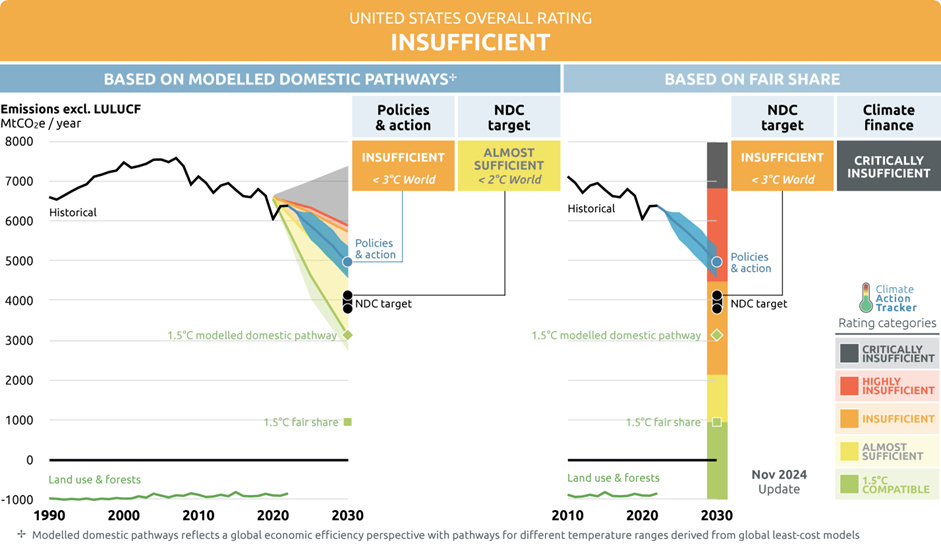
During the Biden administration, US energy policies began to shift towards renewable energy through tax incentives, strict emission standards, and significant investments in solar and wind power (Pusdatim, 2024). Companies like Tesla, General Electric, and NextEra Energy contributed through clean technology innovations (Tjiwidjaja & Salima, 2023). The Biden administration had strengthened its commitment to the Paris Agreement and set a target of reducing emissions by 50% by 2030 and achieving carbon neutrality by 2050 (Lashof, 2024). Through the Inflation Reduction Act 2022, the US allocated USD 369 billion for clean energy, making it the largest investment in the country's history (Bistline et al., 2023). The US administration's efforts to tackle the climate crisis, including transitioning to green energy, were deemed inadequate in addressing the broader climate emergency as shown figure 1 below.
Source: (USA Climate Action Tracker, 2024)
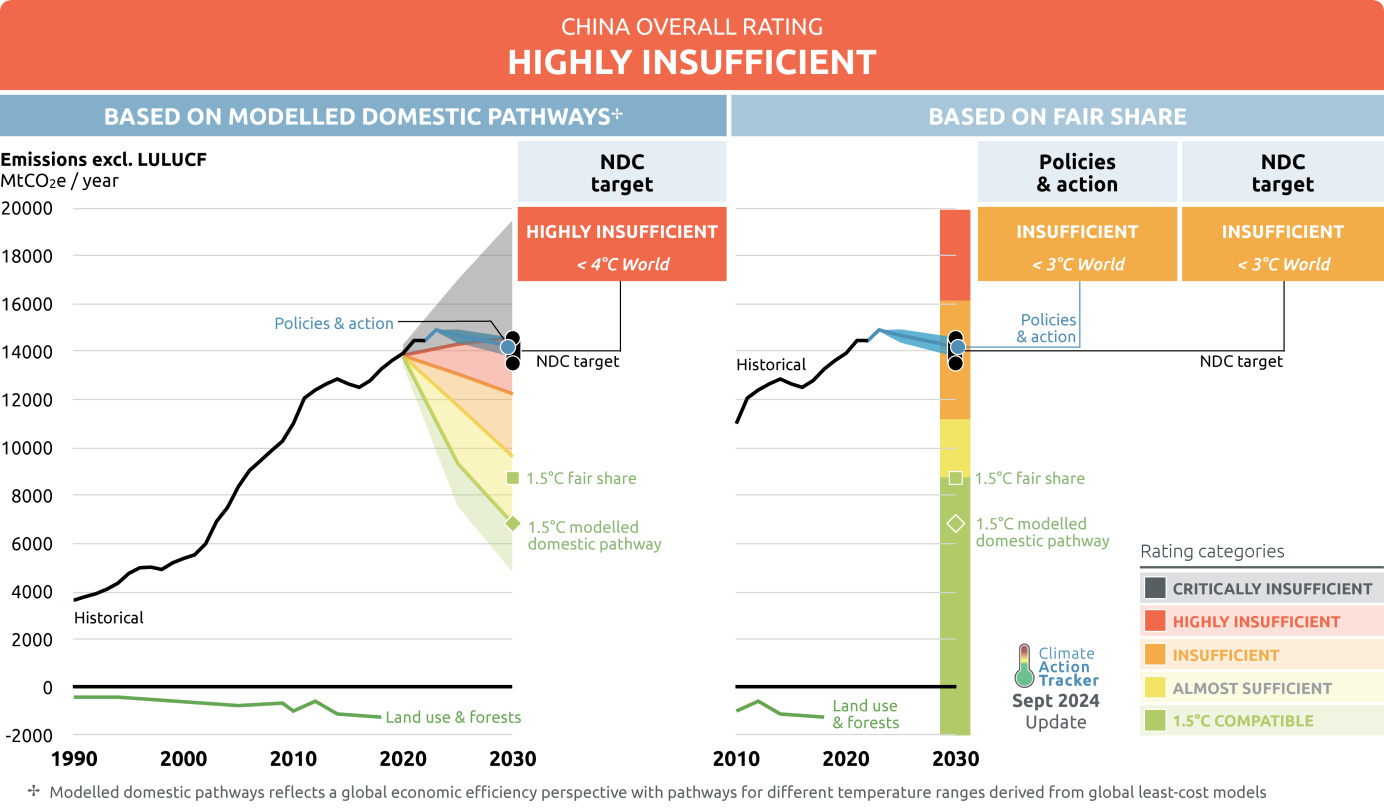
Meanwhile, at the same time, China's centralised political system allowed for the faster and more efficient implementation of strategic decisions in various sectors, including the economy and energy. With full control over national policies, the Chinese government could implement large-scale regulations, contributing to the success of development programs, including the green energy sector (Wati et al., 2023). As the second-largest economy globally, supported by the manufacturing, export, technology, and infrastructure sectors (Saragih et al., 2022), China was and is a major producer of solar panels and wind turbines, with a renewable energy capacity of over 1,000 GW in 2023 (Simarmata et al., 2023). The country aims to achieve peak emissions by 2030 and carbon neutrality by 2060 through policies like the 14th Five-Year Plan, which promotes investment in clean energy and electrification of industrial and transportation sectors (Feng et al., 2021). Incentives for electric vehicles and advancements in battery technology are also offered. China is actively engaged in the Paris Agreement and international cooperation on green energy (Zhou et al., 2021). Despite existing challenges, including reliance on coal and the necessity for substantial investments, the dedication of both the government and the industrial sector bolsters China's trajectory towards a sustainable energy future (Li et al., 2022). However, China's efforts to transition towards green energy as part of their larger climate commitment until 2024 are still considered overall highly insufficient, as shown in figure 2 below.
Source: (China Climate Action Tracker, 2024)
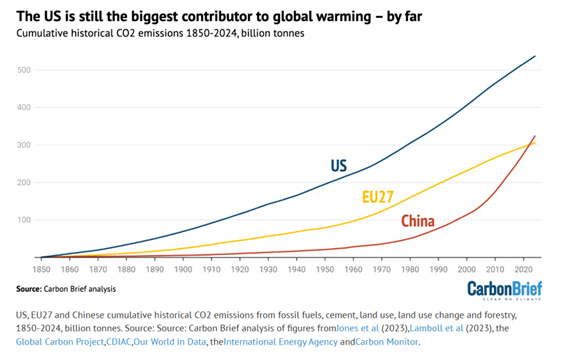
Despite increasing green energy investments, the US remained one of the largest contributors to carbon emissions due to its dependence on fossil fuels and coal till the end of the Biden administration's tenure (Sambodo & Satrio, 2024). Even until now, the United States remains the country with the highest emission levels, significantly outpacing other nations. At the same, time China has overtaken Europe, now ranking as the second largest emitter in the world, as illustrated in Figure 3 below.
Source: (Carbon Brief, 2024)
Drivers of U.S.–China Green Energy Cooperation
During the years 2021-2024, the United States (US) and China demonstrated their commitment to the green energy transition, but geopolitical and economic challenges remained major obstacles to strengthening bilateral cooperation in this sector. Global competition between the two countries, especially in the fields of technology and economy, created various barriers that affect access to clean energy technologies and global supply chains. Rising geopolitical tensions also led to trade policies, restrictions on technology exports, and tighter protection of domestic industries, all of which contribute to the complexity of the green energy relationship between the US and China. To better understand, here are some of the key opportunities and challenges facing the two countries in green energy cooperation during that time.
Change of Leadership and Direction of US Environmental Policy
The change of leadership from Donald Trump to Joe Biden in 2021 caused a major shift in foreign policy and approach to environmental issues, reflecting the ideological differences between the Republican and Democratic Parties. The Republican Party, to which Trump belongs, was and is known for its conservative, pro-business views and support for a limited government role. On environmental issues, this party tends to be sceptical of regulations that are considered to limit economic growth and harm the fossil fuel sector. This attitude was reflected in Trump's policy of withdrawing the United States from the Paris Agreement in 2017, cutting the budget of environmental agencies such as the EPA, revoking the Clean Power Plan programme, and encouraging fossil fuel exploration on federal lands (Gross, 2020; Pompeo, 2019). This nationalistic and protectionist approach led to minimal bilateral climate cooperation with China, as environmental issues were not a priority in relations between the two countries.
In contrast, the Democratic Party and President Joe Biden took a more progressive approach. Biden viewed climate change as a global threat that requires collective action and active government involvement. Since taking office, Biden had immediately returned the US to the Paris Agreement in 2021 and made climate diplomacy a key pillar of foreign policy. Through policies such as the Clean Energy Plan and the Inflation Reduction Act, Biden allocated significant investment for clean energy, electric vehicle incentives, and green technology research, with a target of achieving carbon neutrality by 2050 (The White House, 2024). This approach reopened the space for cooperation with China on transnational issues such as the green energy transition and carbon emission reduction.
Since the beginning of his presidency, President Joe Biden had taken strategic steps to strengthen green energy cooperation with China. Unlike the previous administration under Donald Trump, which withdrew the United States from the Paris Agreement and limited cooperation with China on climate issues, Biden sought to revitalise environmental diplomacy as part of United States foreign policy. In January 2021, one of his first acts as president was to rejoin the Paris Agreement and set a target of net-zero emissions by 2050 (Sweeney, 2021). Biden emphasised that cooperation with China in green energy was not only important for both countries but also for the global community in addressing climate change. To achieve this goal, he appointed John Kerry as Special Presidential Envoy for Climate to lead negotiations with China and other countries. Biden also integrated green energy policies into his economic policies by passing the Inflation Reduction Act (IRA) in 2022, which allocated about $369 billion for clean energy and green technology investments (Williams & Smyth, 2023).
Positive Response and Global Interdependence
During the period from 2021 to 2024, China responded positively to green energy cooperation with the US through its “dual carbon” target, which aims for emissions to peak before 2030 and for carbon neutrality to be achieved before 2060. The establishment of the national carbon market in 2021 accelerated China's industrial transition towards lower emissions (Hou et al., 2023). The two nations are interdependent within the clean energy supply chain, with the US continuing to import solar panels, lithium batteries, and wind turbines from China. China produces approximately 80% of the world’s solar cells and over 50% of electric vehicle batteries (International Energy Agency, 2022). Conversely, China required investment and technological expertise from the US. While the US had attempted to bolster domestic production through the Inflation Reduction Act, its short-term dependence on China remains significant. Consequently, strategic cooperation and dialogue are essential to ensure global supply stability and foster joint innovation. The subsequent figure illustrates China's dominance in the global solar panel supply chain and the US's reliance on these products.
| No | Country/Region | Solar Panel Demand | Average Share of Solar Panel Manufacturing Capacity |
|---|---|---|---|
| 1 | China | 36.4% | 84.0% |
| 2 | Europe | 16.8% | 2.9% |
| 3 | North America | 17.6% | 2.8% |
| 4 | Asia Pacific | 13.2% | 9.1% |
| 5 | India | 6.9% | 1.3% |
| 6 | Rest of the World | 9.1% | 0.8% |
Source: (International Energy Agency, 2022)
At the 2023 Belt and Road Initiative (BRI) Summit, President Xi Jinping emphasised the importance of green transformation in cross-border projects, highlighting China's ambitions as a leader in sustainable development. This was in line with President Joe Biden's policy of placing clean energy as a priority in US foreign policy. This shared vision opens up opportunities for strategic synergy between the two largest emitting countries in addressing global climate change (Rio et al., 2020).
Increasing the Intensity of Meetings and Dialogue on Green Energy
On November 4, 2020, the day after Joe Biden was elected, the US officially withdrew from the Paris Agreement, following President Trump's decision in 2017. Trump argued that the agreement was detrimental to the US economy and favoured countries such as China and India (McGrath, 2020). This decision was widely criticised because the U.S. is the largest cumulative carbon emitter in history. However, many cities and states remain committed to the climate goals. Biden has pledged to rejoin and aims to reduce emissions by 66% by 2035 (The White House, 2024). At the Climate Ambition Summit, Xi Jinping announced an increase in China’s climate targets for 2030: a reduction in carbon intensity of >65% from 2005, non-fossil energy of 25%, an increase in forest stock of 6 billion m³, and a wind-solar capacity of 1,200 GW (Gacek, 2024). This target strengthens China’s economic transition to clean energy and affirms its role in global climate leadership.
John Kerry and Xie Zhenhua issued a joint statement aimed at strengthening the implementation of the Paris Agreement and limiting the global temperature rise to below 1.5°C (U.S. Department of State, 2021). This agreement included commitments to reduce methane emissions, transition to clean energy, and achieve decarbonisation; however, it was noteworthy that China had not signed the global methane pact. John Kerry emphasised that cooperation was crucial for reaching global climate targets, while Greenpeace pointed out that these commitments must be accompanied by more ambitious steps each year (U.S. Department of State, 2021). The real challenge lies in effectively implementing the targets set for carbon neutrality by 2060 for China and 2050 for the US.
Then, Nancy Pelosi's visit to Taiwan led to China suspending climate cooperation with the US, affecting transnational projects like green technology development and joint emissions targets. The episode led to US-China relations reaching their lowest point in 30 years, highlighting the fragility of environmental cooperation amid political conflict (Lo, 2022). At the G20 Bali Summit, Presidents Biden and Xi agreed to maintain open communication and avoid conflict, reopening space for cooperation on climate issues (Reuters, 2022). They supported the establishment of working groups and strategic dialogues on climate change, health, and food security.
Another visit by US climate envoy John Kerry to Beijing to resume previously stalled climate cooperation took place amid an extreme heat wave, underscoring the urgency of climate action (News Agencies, 2023). The focus of discussions included reducing coal and methane emissions. While China was and is aggressively developing renewable energy, its dependence on coal remains high due to domestic energy needs (Williams & Smyth, 2023). Although it did not produce any major breakthroughs, the visit was considered an important step ahead of COP28, with climate a potential area for collaboration even as political relations remain tense. Greenpeace's Li Shuo stressed that “the climate crisis cannot wait for political fixes.”
The intensity of the meeting and dialogue continued as The Sunnylands Statement was released on November 14, 2023, establishing an important turning point in climate cooperation between the US and China. Both nations pledged to limit global temperature rise to below 2°C, with a maximum effort of 1.5°C. The focus is on reducing non-CO₂ emissions, transitioning to renewable energy, and reducing dependence on fossil fuels (Embassy of the People’s Republic of China in the United States of America, 2023). The statement also called for collaboration on the circular economy, resource efficiency, plastic waste management, and forest protection. It was and is expected to be a catalyst for a global agreement.
Another worth mentioning event of close dialogue conducted between the nations during the Biden Administration was the second meeting of the U.S.-China Working Group on Enhancing Climate Action in the 2020s, which was held in Beijing on September 4–6, 2024, led by John Podesta and Liu Zhenmin. The main agenda included the implementation of the 2030 NDC, preparation for the 2035 target, energy transition, and reducing methane emissions through a circular economy approach (Gacek, 2024). Hence, both countries welcomed cooperation forums such as the Circular Economy Cooperation Forum and the Subnational Climate Action Roundtable and agreed to co-host the Methane and Other Non-CO₂ GHG Summit at COP29 in Azerbaijan. Despite geopolitical tensions, this cooperation at that time reflected the recognition that the climate crisis was a shared challenge that requires global leadership, including in climate finance and the implementation of Article 6 of the Paris Agreement (International Institute for Sustainable Development, 2024).
Strategic Role of EPA in Green Energy Cooperation
The Environmental Protection Agency (EPA) played a key role in national climate policy and global environmental diplomacy, especially under the Joe Biden administration. In addition to being a domestic regulator, the EPA has strengthened the US position in international green energy cooperation, including with China, through a scientific and technocratic approach. This cooperative endeavour sought to promote innovative sustainable technologies while tackling urgent global issues like pollution and climate change. In addition to boosting its reputation internationally, the EPA's emphasis on data-driven tactics inspires other countries to make comparable environmental protection pledges.
First, the EPA tightened vehicle and power plant emissions regulations to encourage a clean energy transition. Through the Clean Cars Rule, the EPA targets a reduction of 7.3 billion tonnes of CO₂ emissions in 2027–2032. This standard was an international reference, including for China, which was also trying to reduce its dependence on coal (Environmental Protection Agency, 2024). These measures aimed to improve air quality and promote technological innovation in the automotive and energy sectors. As countries around the world looked to align with these standards, the momentum towards sustainable practices was likely to accelerate globally at that time.
The second development was that the Environmental Protection Agency (EPA) signed a memorandum of understanding (MoU) with the Ministry of Ecology and Environment of China. The purpose of this agreement was to work together on the exchange of pollution monitoring technology and a digital emission inventory system. Due to the fact that this collaboration has taken place, the accuracy of China's emission data in industrial regions like Hebei and Shandong has been improved (Ewing, 2021).
Third, the EPA was active in global forums such as the COP and G20. In addition to being involved in the harmonisation of environmental standards and the decarbonisation of heavy industries, the agency had compiled data and roadmaps for the Global Methane Pledge (COP26). This report was published by the G20 Climate and Energy Joint Committee in 2023. The Environmental Protection Agency (EPA) significantly contributed to bridging the gap between domestic policy and international commitments, facilitating the United States' transition to green energy.
US-China Green Energy Cooperation: Opportunities and Areas
The following section outlines the agreements and commitments established in green energy cooperation between the United States and China, along with associated areas of collaboration, during 2021–2024. This partnership encompassed several significant initiatives, including the creation of the U.S.-China Climate Working Group, which concentrates on methane reduction, energy transition, and promoting a circular economy. Furthermore, the United States and China entered into various strategic agreements regarding green energy cooperation, covering aspects such as technology investment, knowledge transfer, and research collaboration.
First, the re-establishment of the U.S.-China Climate Working Group in 2023 aimed to achieve emission reductions through energy transition, industrial efficiency, and the circular economy (Lewis, 2020). Both the U.S. and China committed to enhancing their renewable energy capacities by 150 GW and 300 GW, respectively, by 2025 (Franssen, 2025). This collaboration included technology transfer, green finance, and the implementation of clean technologies, such as carbon capture and storage. According to the World Resources Institute (2023), this partnership could lead to a reduction of up to 3 billion tonnes of CO₂ equivalent by 2030 and the creation of over 4.5 million green jobs (Fransen et al., 2014).
Second, following their commitments made at COP26 and COP27 to reduce methane emissions, both countries established a measurement, reporting, and verification (MRV) framework for the energy and agriculture sectors. Their goal is to achieve a 30% reduction in global methane emissions by 2030 (Yifan, 2021; International Energy Agency, 2022). They are employing technologies such as satellites and drones to detect methane leaks, which could potentially reduce emissions by as much as 75% (European Commission, 2021). A total investment of USD 1.2 billion has been earmarked for research and demonstration projects in Sichuan and the Permian Basin.
Thirdly, the Sunnylands Agreement was a means by which the two nations encourage joint investment in environmentally friendly technologies such as green hydrogen, smart grids, and lithium-ion batteries (Ball-Burack et al., 2024). With the assistance of raw materials from China as well as patents and capital from the United States, the primary objective was to increase the capacity of battery production by forty percent by the year 2026. In addition to this, they established a Clean Tech Fund with a value of five billion United States dollars to invest in sustainable urban development and renewable energy startups. According to estimates provided by BloombergNEF (2025), this collaboration has the potential to mitigate the emission of 5.2 billion tonnes of CO₂ equivalent by the year 2040.
Challenges of US-China Green Energy Cooperation
While US–China green energy cooperation showed positive prospects in the 2021-2024 period, its implementation faced significant challenges. One of the main obstacles was domestic political dynamics, including changes in policy direction resulting from leadership transitions, which create uncertainty about long-term commitments. The difficulty was evident from the differences in climate policy approaches between the Trump and Biden eras, which affect the consistency of bilateral cooperation. Technological rivalry was also a challenge, with both countries competing to become global leaders in low-carbon energy sectors such as batteries, solar panels, and energy storage systems. This competition often hinders openness in technology transfer due to economic and geopolitical security considerations. Additionally, constraints related to infrastructure and funding, along with competing domestic priorities, complicated the implementation of cooperation. The success of long-term cooperation depends heavily on the ability of both countries to align national interests with global commitments and build an adaptive and resilient approach to climate governance.
Domestic Political Challenges (Change of Leadership)
With regard to the development of green energy in both the United States and China, domestic policies are an essential component. For the United States of America, the implementation of clean energy policies has been plagued by uncertainty as a result of policy shifts brought about by presidential transitions. Under the administration of Barack Obama, the United States of America took steps to cut carbon emissions and became a party to the Paris Agreement in 2015 (Bailey, 2019). However, Trump reversed this policy by withdrawing from the agreement and relaxing environmental regulations (Selby, 2019). As soon as Joe Biden took office, the United States of America recommitted itself to the Paris Agreement and passed the Inflation Reduction Act of 2022, which allotted USD 369 billion for clean energy. Although it was progressive, the industry was and is still confronted with long-term uncertainty as a result of the possibility of policy changes with each new federal administration (Barichella, 2023).
This change of leadership and policy is more likely to occur in the United States due to the intense competition between the Democratic Party and the Republican Party, coupled with the democratic system the country has adopted. This system enables vibrant civil society organisations and other entities to influence government decisions regarding green energy. In contrast, leadership changes in China have been relatively stable, primarily because of the strong dominance of the Chinese Communist Party within the political and governmental framework. However, this arrangement does not imply that China is immune to policy changes when there is a shift in the highest level of leadership. As long as the Communist Party does not present a new political blueprint for green energy, the likelihood of drastic changes remains minimal.
Both the United States of America and China are required to formulate energy policies that are both consistent and long-term. To make a meaningful contribution to the fight against climate change and to ensure a successful transition to green energy, it is essential to ensure policy stability in the United States and to reduce China's reliance on coal (Kayani et al., 2024; Feng et al., 2021). This collaboration could lead to innovative solutions and technologies that benefit not only their respective nations but also the global community. A unified approach may facilitate the sharing of best practices and resources, ultimately advancing the global agenda for sustainable development.
Technological Competition Challenges
The technological competition between the United States (US) and China during the Biden administration, even until now, has had a significant impact on the green energy industry. The US restricts the export of semiconductors and advanced manufacturing technologies to China, which are essential for the production of batteries, solar panels, and smart energy systems. This policy hinders innovation and capacity development of renewable energy technologies in China (Kim et al., 2024). Through the “Chip War” policy, the US also prohibits the sale of technology to companies such as Huawei and SMIC, slowing the integration of advanced technologies in electric vehicles and smart grids (Mirrlees, 2024). In response, China has significantly increased its investment in domestic research and development and now controls over 60% of global production of rare earth elements (REEs), which are crucial for wind turbines and electric vehicle batteries. However, the US's restrictions on technology exports could intensify geopolitical tensions and disrupt global supply chains for green energy (Batsikadze, 2024).
The trade war that began in 2018 has exacerbated the situation. High tariffs imposed on green energy products, including solar panels and batteries, have resulted in market uncertainty and hindered bilateral cooperation (Liu, 2025). For instance, the tariffs applied by the US on solar panel imports from China have increased prices in the domestic market, thereby slowing the adoption of renewable energy—not only in the US but also in other countries that depend on such imports (Fang, 2020).
The US has also restricted Chinese investment in clean energy, particularly in power infrastructure and energy storage projects, thereby weakening technology transfer and research collaboration. In response, China has restricted exports of critical raw materials such as gallium and germanium, which are essential for green energy and semiconductor technologies, exacerbating global supply chain disruptions (Fang, 2020). Despite both countries’ commitment to green energy, these tensions are hampering innovation and investment. Collaborative strategies, such as limited technology exchange mechanisms in the green energy sector, are necessary for the two countries to continue working together without compromising their respective strategic interests.
Infrastructure and Financing Challenges
The transition to green energy requires robust infrastructure and sustainable financing. The United States and China face distinct challenges in terms of grid capacity and the financing of clean energy projects. The US power grid is marked by fragmentation, which hampers its ability to accommodate intermittent renewable energy sources. In contrast, China has demonstrated expertise in using ultra-high-voltage (UHV) technology to effectively distribute energy from rural areas to major urban centres (Al-Shetwi, 2022; Leonard et al., 2020; Shi & Moser, 2021; Li et al., 2020).
Energy storage represents a considerable challenge due to the unpredictable nature of renewable energy sources. The United States is investing in lithium-ion batteries and hydrogen technology; however, the requisite infrastructure is still under development. Conversely, China has positioned itself as a leading battery manufacturer with a robust supply chain, although it continues to pursue long-term storage solutions (Al-Shetwi, 2022; Shafique et al., 2022). Additionally, electric vehicle infrastructure in the United States is insufficient, characterised by a lack of charging stations, whereas China has developed an extensive EV charging network consisting of millions of stations (Nicholas et al., 2019; Ou et al., 2020).
In terms of funding, the United States has relied on tax incentives and private investment, particularly through the USD 369 billion Inflation Reduction Act (IRA) of 2022 (Meunier, 2024) his approach remains unchanged beyond Biden’s administration. However, American investors frequently demonstrate reluctance to invest internationally due to perceived risks and uncertainties surrounding returns (Stein et al., 2022). In contrast, China leverages government investment and prioritises long-term projects, especially the Belt and Road Initiative (BRI), which finances green energy infrastructure in developing countries and is supported by significant credit lines from state banks (Liu, 2025).
Differences in regulations, investment policies, and geopolitical tensions have hampered green energy financing cooperation between the two countries. Import tariffs and restrictions on technology exports also complicate capital flows and innovation (Dar & Javid, 2025). However, by combining the US advantage in technological innovation and private sector dynamics with China's strategic production and financing capacity, cooperation that have been built during this Biden administration can accelerate the global clean energy transition. Therefore, closer diplomacy and collaboration are needed to address infrastructure and financing challenges for a sustainable future (Dar & Javid, 2025).
Conclusion
The research concludes that the opportunity for green energy cooperation between the United States and China was realised due to several driving factors, including the change of leadership from Donald Trump to Joe Biden, positive responses and global interdependence, increasing intensity of meetings and dialogues on green energy cooperation between the two countries, agreements and commitments to cooperation, and the strategic role of the EPA (Environmental Protection Agency). The areas of cooperation included increasing investment in renewable energy technology, technology transfer, and collaboration in clean energy research and development. With this cooperation, the two countries could exchange innovations and technologies that can accelerate the transition to more environmentally friendly energy sources. Additionally, this cooperation contributed to bridging the gap in achieving global climate targets, particularly in supporting international agreements like the Paris Agreement. With increasing investment, the development of green energy reduces dependence on fossil fuels and encourages sustainable economic growth, which has the potential to create new jobs and increase competitiveness in the clean energy industry.
Despite the numerous opportunities for green energy cooperation between the United States and China during the Biden administration, significant challenges remained. One of the primary challenges, even following the conclusion of Biden's term, is the changing leadership dynamics within both countries, which have influenced domestic and foreign policies regarding green energy. The United States often sees policies and regulations change with each new government, whereas China employs a centralised approach to energy decision-making. Additionally, technological competition poses a barrier to cooperation, particularly concerning the development and market dominance of clean energy technologies. Geopolitical factors, including trade tensions, economic sanctions, and ideological differences, further complicate bilateral relations, thereby affecting the sustainability of cooperation in the green energy transition. With Donald Trump’s return as president of the United States, known for his climate-unfriendly policies, the future of such cooperation remains uncertain.
The impact of green energy cooperation on global geopolitics shows that collaboration between the United States and China affects their bilateral relations and has broader implications for global energy stability. As the two largest economic powers in the world, energy decisions and policies adopted by both countries will affect the dynamics of the international energy market. The success of this cooperation has the potential to encourage other countries to accelerate the green energy transition and increase their commitment to climate change mitigation, but failure would bring negative impacts to the world. In addition, collaboration in the field of green energy can also be an effective diplomatic tool to ease geopolitical tensions and create more stable relations between the two countries.
Acknowledgements
This research is partially funded by Universitas Islam Riau.
Bibliography
Alam, A., Saleem, A., Ahmad, M., Khattak, A. K., & Ullah, I. (2024). Beyond Paris: Accelerating International Progress on Climate Change and the Green Economy. Journal Of Climate and Community Development, 3(2), 105-120.
Ali, S., Akter, S., Ymeri, P., & Fogarassy, C. (2022). How the Use of Biomass for Green Energy and Waste Incineration Practice Will Affect GDP Growth in the Less Developed Countries of the EU (A Case Study with Visegrad and Balkan Countries). Energies, 15(7), 2308. https://doi.org/10.3390/en15072308
Al-Shetwi, A. Q. (2022). Sustainable development of renewable energy integrated power sector: Trends, environmental impacts, and recent challenges. Science of The Total Environment, 822, 153645.https://doi.org/10.1016/j.scitotenv.2022.153645
Androniceanu, A., & Sabie, O. M. (2022). Overview of green energy as a real strategic option for sustainable development. Energies, 15(22), 8573. https://doi.org/10.3390/en15228573
Arikunto, S. (2013). Prosedur Penelitian Suatu Pendekatan Praktik. Jakarta: PT. Rineka Cipta.
Bailey, C. J. (2019). Assessing President Obama’s climate change record. Environmental Politics, 28(5), 847-865. https://doi.org/10.1080/09644016.2018.1494967
Ball-Burack, A., Xi, X., & Kammen, D. M. (2024). From powerpoint to powerplant: evaluating the impact of the U.S.-China Sunnylands commitment to tripling global renewable energy capacity by 2030. Environmental Research Letters, 19(4), 041007. https://doi.org/10.1088/1748-9326/ad3284
Barichella, A. (2023). Climate politics under Biden: the clean energy revolution, enhanced cooperative federalism and the ‘all-of-government’ approach. In Can Cities, States and Regions Save Our Planet? Transatlantic Perspectives on Multilevel Climate Governance (pp. 85-128). Cham: Springer International Publishing.
Batsikadze, N. (2024). Securing a Technological Edge: The Rationale Behind China's Export Ban on Rare Earth Magnet Manufacturing Technology.
Bistline, J., Blanford, G., Brown, M., Burtraw, D., Domeshek, M., Farbes, J., Fawcett, A., Hamilton, A., Jenkins, J., Jones, R., King, B., Kolus, H., Larsen, J., Levin, A., Mahajan, M., Marcy, C., Mayfield, E., McFarland, J., McJeon, H., … Zhao, A. (2023). Emissions and energy impacts of the Inflation Reduction Act. Science, 380(6652), 1324–1327. https://doi.org/10.1126/science.adg3781
BloombergNEF. (2025, January 30). Global investment in the energy transition exceeded $2 trillion for the first time in 2024, according to BloombergNEF report. https://about.bnef.com/insights/finance/global-investment-in-the-energy-transition-exceeded-2-trillion-for-the-first-time-in-2024-according-to-bloombergnef-report/
Carbon Brief. (2024). Analysis: China’s emissions have now caused more global warming than EU. https://www.carbonbrief.org/analysis-chinas-emissions-have-now-caused-more-global-warming-than-eu/#:~:
Cifuentes-Faura, J., Mohammed, K. S., & Alofaysan, H. (2024). The connectedness and structural changes among green and conventional energy markets with CO2 emissions in the United States. Economic Analysis and Policy, 83, 80–94. https://doi.org/10.1016/j.eap.2024.06.009
Climate Watch. (2024). Global Historical Greenhouse Gas Emissions. Diakses dari https://www.climatewatchdata.org/ghgemissions?end_year=2021&gases=allghg®ions=CHN%2CUSA&start_year=2016
Cozzi, L., Gul, T., Spencer, T., & Levi, P. (2024, April 18). Clean energy is boosting economic growth – Analysis. IEA. https://www.iea.org/commentaries/clean-energy-is-boosting-economic-growth
Creswell, J. W. (2009). Research design: Qualitative, quantitative, and mixed methods approaches, 3rd ed (pp. xxix, 260). Sage Publications, Inc.
Daaboul, J., Moriarty, P., & Honnery, D. (2023). Net green energy potential of solar photovoltaic and wind energy generation systems. Journal of Cleaner Production, 415, 137806. https://doi.org/10.1016/j.jclepro.2023.137806
Danish, N., & Ulucak, R. (2021). Renewable energy, technological innovation and the environment: A novel dynamic auto-regressive distributive lag simulation. Renewable and Sustainable Energy Reviews, 150, 111433. https://doi.org/10.1016/j.rser.2021.111433
Dar, Z. A., & Javid, S. (2025). Navigating the Turbulent Waters: An In-Depth Study of US-China Geopolitical Rivalry. Law, Economics and Society, 1(1), p1-p1. https://doi.org/10.30560/les.v1n1p1
Dashti, A., & Korzani, M. G. (2021b). Study of geothermal energy potential as a green source of energy with a look at energy consumption in Iran. Geothermal Energy, 9(1). https://doi.org/10.1186/s40517-021-00210-2
Dugis, V. (2016). Teori Hubungan Internasional Perspektif-Perspektif Klasik . Surabaya: Cakra Studi Global Strategis (SCGS) https://www.researchgate.net/profile/Vinsensio-Dugis/publication/321709080_Teori_Hubungan_Internasional_Perspektif-Perspektif_Klasik/links/5a7f16a80f7e9be137c71dbb/Teori-Hubungan-Internasional-Perspektif-Perspektif-Klasik.pdf
Embassy of the People's Republic of China in the United States of America. (2023, November 14). The Sunnylands statement on enhancing cooperation to address the climate crisis. https://us.china-embassy.gov.cn/eng/zmgx/zxxx/202311/t20231115_11180471.htm
Environmental Protection Agency. (2024, March 20). Biden–Harris Administration finalizes strongest‑ever pollution standards for cars that position U.S. companies and workers to lead the clean vehicle future, protect public health, address the climate crisis, save drivers money [Press release]. U.S. EPA. https://www.epa.gov/newsreleases/biden-harris-administration-finalizes-strongest-ever-pollution-standards-cars-position
European Commission. (2021, October 31). International Methane Emissions Observatory launched to boost action on powerful climate-warming gas [Press release]. https://ec.europa.eu/commission/presscorner/detail/it/ip_21_5636
Ewing, J. (2021). Pathways for U.S.–China climate cooperation under the Biden administration. In From Trump to Biden and beyond (pp. 111–129). Springer. https://doi.org/10.1007/978-981-16-4297-5_8
Fang, M. M. (2020). A crisis or an opportunity? The trade war between the US and China in the Solar PV Sector. Journal of World Trade, 54(1). http://dx.doi.org/10.2139/ssrn.3441479
Feng, L. I. U., Wenjun, C. A. O., Jianming, Z. H. A. N. G., Guangming, C. A. O., & Linfeng, G. U. O. (2021). The Technological Innovation Progress and Development Direction of the 14th Five-Year Plan Period in Chinese Coal Industry. Journal of China Coal Society, 46(1), 1-15.
Fransen, T., Ge, M., & Damassa, T. (2014, November 20). The China-U.S. climate agreement: By the numbers. World Resources Institute. https://www.wri.org/insights/china-us-climate-agreement-numbers
Franssen, C. (2025, May 15). China’s renewables capacity growth leaps ahead. Environment Analyst. https://environment-analyst.com/global/110975/chinas-renewables-capacity-growth-leaps-ahead
Gacek, Ł. (2024). Chapter 8: China’s policy on climate and energy towards 2060. In China under Xi Jinping (pp. 192–214). Brill. https://doi.org/10.1163/9789004691087_010
Gross, S. (2020, August 4). What is the Trump administration’s track record on the environment? Brookings Institution. https://www.brookings.edu/articles/what-is-the-trump-administrations-track-record-on-the-environment/
Hadari, Nawawi, (2003). “Metode Penelitian Bidang Sosial”, Gajah Mada University Press, Yogyakarta
Hassan, Q., Viktor, P., Al-Musawi, T. J., Ali, B. M., Algburi, S., Alzoubi, H. M., Al-Jiboory, A. K., Sameen, A. Z., Salman, H. M., & Jaszczur, M. (2024). The renewable energy role in the global energy Transformations. Renewable Energy Focus, 48, 100545. https://doi.org/10.1016/j.ref.2024.100545
Hou, F., Liu, Y., Ma, Z., Liu, C., Zhang, S., Yang, F., & Nie, Y. (2023). Study of the carbon neutral path in China: a literature review. Chinese Journal of Urban and Environmental Studies, 11(02), 2350008. DOI: 10.1142/S2345748123500082
International Energy Agency (2022), Solar PV Global Supply Chains, IEA, Paris https://www.iea.org/reports/solar-pv-global-supply-chains, Licence: CC BY 4.0 https://www.iea.org/reports/solar-pv-global-supply-chains/executive-summary
International Institute for Sustainable Development. (2024, May 15). US, China exchange experiences with climate policies and actions [Press release]. https://sdg.iisd.org/news/us-china-exchange-experiences-with-climate-policies-and-actions/
Jackson, R. & Sørensen, G. (2013). Introduction to International Relations Theories and Approaches Fifth edition. Oxford University Press.
Kayani, U., Sheikh, U. A., Khalfaoui, R., Roubaud, D., & Hammoudeh, S. (2024). Impact of Climate Policy Uncertainty (CPU) and global Energy Uncertainty (EU) news on US sectors: The moderating role of CPU on the EU and US sectoral stock nexus. Journal of Environmental Management, 366, 121654. https://doi.org/10.1016/j.jenvman.2024.121654
Keohane, R., & Nye, J. (2012). Power and Interdependence. Boston, MA: Longman.
Kilinc-Ata, N., & Proskuryakova, L. N. (2024). The contribution of energy policies to green energy transition in the Asia-Pacific region. Renewable Energy, 237, 121797. https://doi.org/10.1016/j.renene.2024.121797
Kim, H. J., Oh, J., & Kwon, H. J. (2024). Investigating the effect of the U.S. semiconductor export controls on China. SSRN Electronic Journal. https://doi.org/10.2139/ssrn.5033926
Leonard, M. D., Michaelides, E. E., & Michaelides, D. N. (2020). Energy storage needs for the substitution of fossil fuel power plants with renewables. Renewable Energy, 145, 951-962. https://doi.org/10.1016/j.renene.2019.06.066
Lewis, J. I. (2020). Towards a New Era of US Engagement with China on Climate Change. Geo. J. Int'l Aff., 21, 173. https://doi.org/10.1353/gia.2020.0032
Li, J. (2020). Charging Chinese future: the roadmap of China's policy for new energy automotive industry. International Journal of Hydrogen Energy, 45(20), 11409-11423. https://doi.org/10.1016/j.ijhydene.2020.02.075
Li, J., Ho, M. S., Xie, C., & Stern, N. (2022). China's flexibility challenge in achieving carbon neutrality by 2060. Renewable and Sustainable Energy Reviews, 158, 112112. https://doi.org/10.1016/j.rser.2022.112112
Liu, Z. (2025). The two-level games in China’s foreign trade policies. Taylor & Francis.
Lo, J. (2022, August 8). US-China climate working group cancelled after Pelosi’s Taiwan visit. Climate Home News. https://www.climatechangenews.com/2022/08/08/us-china-climate-working-group-cancelled-after-pelosis-taiwan-visit/
Lopez, A., Zuckerman, G. R., Pinchuk, P., Gleason, M., Rivers, M., Roberts, O., ... & Cole, W. (2025). Renewable Energy Technical Potential and Supply Curves for the Contiguous United States: 2024 Edition (No. NREL/TP-6A20-91900). National Renewable Energy Laboratory (NREL), Golden, CO (United States).
McGrath, M. (2020, November 4). Climate change: US formally withdraws from Paris agreement. BBC News. https://www.bbc.com/news/science-environment-54797743
Meunier, M. (2024). How youth-led climate movements played a role in the passage of the United States’ first ever climate bill, the Inflation Reduction Act. Revue LISA/LISA e-journal. Littératures, Histoire des Idées, Images, Sociétés du Monde Anglophone–Literature, History of Ideas, Images and Societies of the English-speaking World, 22(58). https://doi.org/10.4000/131jx
Miles, M.B., Huberman, A.M. and Saldana, J. (2014) Qualitative Data Analysis: A Methods Sourcebook. Sage, London.
Mirrlees, T. (2024). The US and China’s digital tech war: A new rivalry within and beyond the US empire. Socialist Register, 60(A New Global Geometry), 105-140.
Myllyvirta, L. (2023, November 21). Analysis: China’s emissions set to fall in 2024 after record growth in Clean Energy. Centre for Research on Energy and Clean Air. https://energyandcleanair.org/analysis-chinas-emissions-set-to-fall-in-2024-after-record-growth-in-clean-energy/
News Agencies. (2023, July 17). John Kerry arrives in China to revive climate talks. Al Jazeera. https://www.aljazeera.com/news/2023/7/17/john-kerry-arrives-in-china-to-revive-climate-talks
Nicholas, M., Hall, D., & Lutsey, N. (2019). Quantifying the electric vehicle charging infrastructure gap across US markets. Int. Counc. Clean Transp, 20, 1-33. https://theicct.org/publication/quantifying-the-electric-vehicle-charging-infrastructure-gap-across-u-s-markets/
Ou, S., Lin, Z., He, X., Przesmitzki, S., & Bouchard, J. (2020). Modeling charging infrastructure impact on the electric vehicle market in China. Transportation Research Part D: Transport and Environment, 81, 102248. DOI: https://doi.org/10.1016/j.trd.2020.102248
Philippe Martin, Thierry Mayer, Mathias Thoenig. Make Trade Not War?. Review of Economic Studies, 2008, 75 (3), pp.865 - 900. ff10.1111/j.1467-937X.2008.00492.xff. ffhal-03415798f https://sciencespo.hal.science/hal-03415798v1/document
Pompeo, M. R. (2019, November 4). On the U.S. withdrawal from the Paris Agreement [Press statement]. U.S. Department of State. https://2017-2021.state.gov/on-the-u-s-withdrawal-from-the-paris-agreement/?safe=1
Pusdatim (2024). Pusdatim: ESDM Kementerian Energi dan Sumber Daya Mineral (2024). Laporan Reviu Informasi Strategis Periode Jul-Sept 2024. https://www.esdm.go.id/assets/media/content/content-laporan-reviu-informasi-strategis-periode-juli-september-2024.pdf
Qing, L., Abbas, J., Najam, H., Ma, X., & Dagestani, A. A. (2023). Investment in renewable energy and green financing and their role in achieving carbon-neutrality and economic sustainability: Insights from Asian region. Renewable Energy, 221, 119830. https://doi.org/10.1016/j.renene.2023.119830
Rio, Azzhary & Firza, Hilfi. (2020). BRI as International Norm Construction of China's Green Development Strategy in Asia. Indonesian Journal of International Relations. http://dx.doi.org/10.32787/ijir.v5i1.143
Sambodo, R. A., & Satrio, J. (2024). Kerja Sama China-Uni Eropa Melalu China-European Union Emission Trading System Project Dalam Mengurangi Emisi Karbon Di China 2014-2021. Jurnal Ilmiah Dinamika Sosial, 8(2), 251-268. DOI: https://doi.org/10.38043/jids.v8i2.5445
Saragih, H., Rahayu, H., & Zulham, M. (2022). Kekuatan Ekonomi-Politik China Pasca Covid-19. Dauliyah: Journal of Islam and International Affairs, 7(1), 1-32. DOI:10.21111/dauliyah.v7i1.7538
Sayigh, A. (2019). Solar and wind energy will supply more than 50% of world electricity by 2030. In Innovative renewable energy (pp. 385–399). https://doi.org/10.1007/978-3-030-30841-4_27
Selby, J. (2019). The Trump presidency, climate change, and the prospect of a disorderly energy transition. Review of International Studies, 45(3), 471-490. DOI: https://doi.org/10.1017/S0260210518000165
Shafique, M., Rafiq, M., Azam, A., & Luo, X. (2022). Material flow analysis for end-of-life lithium-ion batteries from battery electric vehicles in the USA and China. Resources, Conservation and Recycling, 178, 106061. https://doi.org/10.1016/j.resconrec.2021.106061
Shi, L., & Moser, S. (2021). Transformative climate adaptation in the United States: Trends and prospects. Science, 372(6549), eabc8054. https://doi.org/10.1126/science.abc8054
Simarmata, N. P. E., Estefani, Y., Bahri, B. S., & Sibarani, S. S. (2023). Penggunaan Energi Bersih Menggunakan Panel Surya Di India. Jurnal Energi Baru dan Terbarukan, 4(3), 274-284. https://doi.org/10.14710/jebt.2023.21518
Stein, J., Joselow, M., & Roubein, R. (2022). How the Inflation Reduction Act might impact you-and change the US. The Washington Post, NA-NA. https://www.washingtonpost.com/us-policy/2022/07/28/manchin-schumer-climate-deal/
Sweeney, S. (2021). Five years on, the Paris climate Agreement needs an overhaul. New Labor Forum, 30(1), 102–109. https://doi.org/10.1177/1095796020980166
The White House. (2024, December 19). FACT SHEET: President Biden sets 2035 climate target aimed at creating good-paying union jobs, reducing costs for all Americans, and securing U.S. leadership in the clean energy economy of the future. https://bidenwhitehouse.archives.gov/briefing-room/statements-releases/2024/12/19/fact-sheet-president-biden-sets-2035-climate-target-aimed-at-creating-good-paying-union-jobs-reducing-costs-for-all-americans-and-securing-u-s-leadership-in-the-clean-energy-economy-of-the-future/
Tjiwidjaja, H., & Salima, R. (2023). Dampak Energi Fosil Terhadap Perubahan Iklim Dan Solusi Berbasis Energi Hijau. Jurnal Wilayah, Kota Dan Lingkungan Berkelanjutan, 2(2), 166-172. https://doi.org/10.58169/Jwikal.V2i2.625
U.S. Department of State. (2021, April 17). U.S.-China joint statement addressing the climate crisis [Media note]. https://2021-2025.state.gov/u-s-china-joint-statement-addressing-the-climate-crisis/
Ullah, S., & Lin, B. (2024). Green energy dynamics: Analyzing the environmental impacts of renewable, hydro, and nuclear energy consumption in Pakistan. Renewable Energy, 232, 121025. https://doi.org/10.1016/j.renene.2024.121025
Ullah, S., Luo, R., Nadeem, M., & Cifuentes-Faura, J. (2023). Advancing sustainable growth and energy transition in the United States through the lens of green energy innovations, natural resources and environmental policy. Resources Policy, 85, 103848. https://doi.org/10.1016/j.resourpol.2023.103848
Usman, O., Iorember, P. T., Ozkan, O., & Alola, A. A. (2023). Dampening energy security-related uncertainties in the United States: The role of green energy-technology investment and operation of transnational corporations. Energy, 289, 130006. https://doi.org/10.1016/j.energy.2023.130006
Wang, X., Sun, X., Ahmad, M., & Chen, J. (2024). Energy transition, ecological governance, globalization, and environmental sustainability: Insights from the top ten emitting countries. Energy, 292, 130551. https://doi.org/10.1016/j.energy.2024.130551
Wang, Y., Liu, C., & Sun, Y. (2024). No more coal abroad! Unpacking the drivers of China’s green shift in overseas energy finance. Energy Research & Social Science, 111, 103456. https://doi.org/10.1016/j.erss.2024.103456
Wati, R., Wati, W., & Hanifa, S. D. (2023). Analisis Perbandingan Administrasi Publik Negara China Dan Rusia. Pentahelix, 1(1), 63-79. https://doi.org/10.24853/penta.1.1.63-79
Williams, A., & Smyth, J. (2023). Kerry defends US over surging gas output. Envoy says legislation by Biden makes country a global climate leader. The Financial Times, 8-8. https://www.ft.com/content/d2b29baf-f8c3-433b-87ab-47abe2fd76d4
Wu, Z., Huang, X., Chen, R., Mao, X., & Qi, X. (2022). The United States and China on the paths and policies to carbon neutrality. Journal of Environmental Management, 320, 115785. https://doi.org/10.1016/j.jenvman.2022.115785
Xue, J., Poon, J., Yang, Y., & Ji, Q. (2024). Effect of green industrial policy on China’s outward renewable energy investment. Energy Economics, 138, 107830. https://doi.org/10.1016/j.eneco.2024.107830
Yifan, J. (2021, November 18). China at COP26: Coal, methane, and 1.5 degrees Celsius. Sixth Tone. https://www.sixthtone.com/news/1008998
Zahran, R. Z. & Alfajri. (2023). Strategi Non-Governmental Organization (NGO) Jikalahari dalam Tata Kelola Hutan Provinsi Riau Terkait Upaya Pengendalian Perubahan Iklim Global Tahun 2013-2023. Journal of Diplomacy and International Studies. Vol. 6 No. 1 (2023), pp 24-36
Zhang, J., & Chen, F. (2024). Impact of extreme high temperatures on pollution emissions of enterprise: Evidence from China. Journal of Environmental Management, 365, 121493. https://doi.org/10.1016/j.jenvman.2024.121493
Zhang, W., Yang, J., Sheng, P., Li, X., & Wang, X. (2014). Potential cooperation in renewable energy between China and the United States of America. Energy Policy, 75, 403–409. https://doi.org/10.1016/j.enpol.2014.09.016
Zhou, S., Tong, Q., Pan, X., Cao, M., Wang, H., Gao, J., & Ou, X. (2021). Research on low-carbon energy transformation of China necessary to achieve the Paris agreement goals: A global perspective. Energy Economics, 95, 105137. https://doi.org/10.1016/j.eneco.2021.105137