Political Campaign on Social Media: A Semiotic Study of the Electoral Victory of Regional Head Candidate Pair Dilla-Muslimin in Tanjung Jabung Timur through the Facebook Platform
Dadang Nurjaman1* , Ujang Wardi2
1Communication Studies Program, Universitas Subang, 41285, Jawa Barat-Indonesia
2Government Studies Program, UIN Sulthan Thaha Saifuddin Jambi, 36361, Jambi-Indonesia
Abstract
Abstract In contemporary electoral campaigns, social media has emerged as a central arena of political communication, reshaping how candidates build relationships with their constituents. This article investigates how the Dillah Hikmah Sari and Muslimin Tanja (Dilla-Muslimin) pair used Facebook as their main campaign channel during the 2024 Tanjung Jabung Timur Regional Election. Applying Roland Barthes' semiotic model, the study traces the denotative and connotative levels of meaning embedded within the campaign posts published on the 'Diminta Merata' Facebook page. Employing a qualitative, internet-based research design informed by Harold D. Lasswell's communication model, the findings show that the Dilla-Muslimin team deliberately combined visual symbols, political hashtags, slogans, and program-based narration to construct a unified public image built around fairness, closeness to the community, and a commitment to development. Rather than simply conveying information, the semiotic design of the campaign materials worked to shape voters' perceptions and encourage political participation. The eventual outcome—Dilla-Muslimin winning 58.63 percent of the valid votes—illustrates how a semiotically grounded, data-informed social media strategy can be effective at the regional government level.
Keywords: Campaign; Political Communication; Regional Election; Semiotics; Social Media.
Abstrak
Abstrak Dalam kampanye pemilu kontemporer, media sosial telah menjadi arena utama komunikasi politik yang mengubah cara kandidat membangun hubungan dengan konstituennya. Artikel ini mengkaji bagaimana pasangan Dillah Hikmah Sari dan Muslimin Tanja (Dilla-Muslimin) memanfaatkan Facebook sebagai kanal kampanye utama mereka pada Pilkada Tanjung Jabung Timur 2024. Dengan menerapkan model semiotika Roland Barthes, penelitian ini menelusuri makna denotatif dan konotatif yang terkandung dalam unggahan kampanye di halaman Facebook "Diminta Merata". Menggunakan desain penelitian kualitatif berbasis internet yang berpijak pada model komunikasi Harold D. Lasswell, temuan penelitian menunjukkan bahwa tim Dilla-Muslimin secara sengaja memadukan simbol visual, tagar politik, slogan, dan narasi berbasis program untuk membangun citra publik yang utuh, berlandaskan keadilan, kedekatan dengan masyarakat, dan komitmen terhadap pembangunan. Alih-alih sekadar menyampaikan informasi, desain semiotik materi kampanye tersebut bekerja untuk membentuk persepsi pemilih dan mendorong partisipasi politik. Hasil akhir—kemenangan Dilla-Muslimin dengan perolehan 58,63 persen suara sah—menggambarkan bagaimana strategi media sosial yang berlandaskan semiotika dan berbasis data dapat efektif diterapkan di tingkat pemerintahan daerah.
Kata Kunci: Kampanye; Komunikasi Politik; Media Sosial; Pemilihan Kepala Daerah; Semiotika.
Introduction
Over the last two decades, rapid digital transformation has reshaped the terrain of political communication in fundamental ways. Rather than functioning as a mere supplementary tool, the internet—social media above all—has become the principal arena in which political discourse is contested (Chadwick, 2013). Within Indonesia, this shift is visible across every level of electoral contest, from the presidency down to regional head elections. Candidates able to harness the digital ecosystem strategically and consistently gain a marked advantage over rivals who continue to rely on conventional campaign methods (Norris, 2001). Against this backdrop, the 2024 Tanjung Jabung Timur Regional Election offers a fitting empirical setting for examining social media-driven political campaigning at the local government level.
Sustained progress in information and communication technology has ushered society into the age of new media. As a tangible expression of this shift, the internet can encode, store, manipulate, and disseminate messages at scale (Ruben, 1998). Within the political sphere, it has changed how individuals, organizations, and institutions communicate, deliberate, and circulate their agendas to a global public (Sjoraida et al., 2021). It has also opened broader, more decentralized, and more interactive channels for political communication, extending well beyond the limits of conventional mass media such as television, radio, and newspapers.
In terms of political communication, Selnow contends that the internet allows political messages to reach audiences with far greater efficiency than conventional mass media, while also enabling more precise audience segmentation (Subiakto, 2013). This positions the internet as a strategic instrument for democratizing information, including as a bridge for groups historically marginalized from political discourse. This paradigm shift is reinforced by Blumler and Kavanagh's (1999) claim regarding the rise of the Third Age of Political Communication, in which digital media increasingly supplants print and broadcast media as the main channel for political communication. Loader and Mercea (2011) similarly observe that social media has created new spaces for civic political participation that had previously been excluded from formal communication channels.
Among the array of social media platforms, Facebook continues to hold a prominent position within Indonesia's political communication landscape. According to Charta Politika survey data (May 2024), 41.4 percent of residents in Tanjung Jabung Timur rely on Facebook as their main source of socio-political information, while 62.8 percent of the district's population maintain active social media accounts. Such conditions foster a digital ecosystem well suited to social media-based political campaigning. Through interactive features—text posts, images, videos, live broadcasts, and community forums—Facebook allows candidates and campaign teams to cultivate more personal and responsive relationships with constituents (Enli & Skogerbø, 2013). Gibson and McAllister (2011) similarly find that an active candidate presence on social media is positively associated with greater voter support, especially among young, digitally literate voters.
The 2024 Tanjung Jabung Timur Regional Election offers a fitting empirical case for exploring this dynamic. The pairing of Dillah Hikmah Sari and Muslimin Tanja (Dilla-Muslimin) explicitly prioritized social media as part of their campaign strategy, alongside efforts to foster direct engagement through volunteer networks. This commitment took shape through the "Diminta Merata" Facebook page, which was managed in a structured, professional manner. The final election outcome bore out the effectiveness of this approach: Dilla-Muslimin secured 81,585 votes (58.63 percent), ahead of the Zumi Laza–Muhammad Aris pair, who received 57,564 votes (41.37 percent), out of 139,149 valid votes cast.
While research on digital campaigning in Indonesia has grown substantially, most of it centers on national-level contests, particularly presidential and legislative elections (Adinugroho et al., 2019; Harisah, 2019). Comparatively few studies examine digital campaign strategies at the district or city level, and fewer still apply a systematic semiotic lens to such cases. This gap forms the point of departure and rationale for the present study, which analyzes the Dilla-Muslimin campaign's use of Facebook through the lens of Roland Barthes' semiotic approach. Specifically, the study aims to uncover: (1) the construction of denotative and connotative meaning within the campaign content posted on the "Diminta Merata" Facebook page; and (2) the strategies the campaign team employed on Facebook to build political image, broaden communicative reach, and encourage voter participation. It is hoped that this study will offer both theoretical and practical contributions to understanding digital political communication at the regional level, particularly amid the ongoing digital transformation reshaping political behavior across Indonesian society.
Theoritical Framework
Political Communication and Social Media
Political communication can be conceptually defined as the process through which political actors deliver politically charged messages to audiences, whether via rhetoric, public speeches, or various campaign activities carried out in the public sphere (Susanto, 2013). Citing McNair (2017), Budiarsa and Pandiangan (2022) describe political communication as communicative action aimed at achieving specific political goals, identifying three core dimensions: communication initiated by politicians pursuing particular objectives; communication flowing from voters back to politicians; and political communication expressed through news coverage and discussion across digital platforms. Rather than a one-way act, this framework treats political communication as a dialogic process involving multiple actors with competing interests (Perloff, 2021).
Cangara (2016) offers a comprehensive account of political communication's functions: disseminating public information about political institutions' activities, socializing policies and programs, motivating politicians and party supporters, providing channels for public aspirations, and strengthening political activity through agenda setting. Within this framework, Arifin (2011) identifies three central aims of political communication—building a positive political image, shaping public opinion, and encouraging political participation reflected in voting behavior—which are mutually reinforcing and inseparable in effective electoral campaigning.
Perloff (2021) further underscores media's role as a pivotal actor within the political communication ecosystem, noting that the language and symbols political actors employ shape not just individuals and groups but ultimately the success or failure of national policy. Regarding social media specifically, Holmes (2005) distinguishes the internet from television along three lines: its nature as decentralized versus centered; two-way interactivity versus one-way transmission; and its capacity to resist centralized control rather than be easily regulated (as cited in Hasfi, 2019). These distinctions position the internet—and social media in particular—as a qualitatively distinct arena of political communication compared with conventional media. Chadwick and Howard (2009) add that the internet has introduced a new repertoire of political action that allows citizens to participate more directly and spontaneously in democratic life.
Roland Barthes' Semiotics in Political Communication
Semiotics concerns itself with signs and sign systems as they operate within social and cultural life (Eco, 1976). Building on Ferdinand de Saussure's structural semiotics, Roland Barthes extended the analysis of popular culture and mass communication through a two-order model of signification: denotation, or first-order literal meaning, and connotation, the second-order layer carrying cultural and ideological significance (Barthes, 1968). For Barthes, every sign—whether verbal, visual, or audiovisual—carries meaning beyond its surface content, and in political communication it is precisely this connotative dimension that most powerfully shapes how the public perceives candidates and policies (Vera, 2014).
John Fiske (2007) similarly describes semiotics as the study of how meaning is produced within media 'texts,' which in digital political campaigns take the form of posters, photographs, videos, slogans, hashtags, and narratives. Each of these elements functions not merely as information but as a sign that actively shapes political reality (Chandler, 2006). Barthes' semiotic method allows researchers to unpack the layers of meaning that campaign teams deliberately build into a candidate's image, making it especially useful for analyzing social media content, where every visual choice, color, word, and symbol carries strategic and ideological weight (Kertanegara, 2019).
Barthes' notion of myth is also pertinent to digital political campaigning. For Barthes, myth operates as a second-order system of meaning that turns history into what appears natural—presenting particular values as though they were self-evidently universal (Barthes, 1972). By repeatedly depicting Dilla-Muslimin alongside ordinary citizens and framing development as equitable, the campaign team constructs a myth of fair, people-centered leadership—one that legitimizes the candidates' political claims and deepens voters' identification with the vision on offer.
Facebook as a Political Campaign Medium
Facebook remains among the social media platforms with the widest reach in Indonesia and functions as a key arena for digital political communication. With over 112 million active users nationwide in 2024 (We Are Social, 2024), it offers a scale of message distribution that conventional media cannot match. For political campaigning, Facebook provides several strategic features: public Pages for structured content distribution, paid advertising with precise demographic targeting, Groups for building supporter communities, and Live for real-time voter interaction (Enli & Skogerbø, 2013).
Vergeer et al. (2013) find that an active candidate presence on social media is positively linked to voter engagement and media coverage—an effect that strengthens when content is authentic, locally grounded, and narratively coherent. In Indonesia, Adinugroho et al. (2019) show that social media, Facebook in particular, plays a considerable role in shaping the preferences of young voters, an increasingly dominant share of the electorate. At the local level, Facebook's ability to support geographically targeted community communication makes it a particularly effective tool for regional election campaigns (Harisah, 2019).
Beyond serving as a distribution channel, Facebook also acts as a space where public opinion takes shape (Schroder, 2004). Through likes, shares, and comments, users move from passively receiving campaign messages to actively helping circulate them, generating a viral effect that expands message reach without additional cost. Tapscott describes this pattern as the net generations, referring to the generation raised alongside the internet that tends to actively take part in producing and distributing digital content (as cited in Cahyono, 2020). This dynamic helps explain why Facebook-based campaigning is a particularly cost-effective strategy for regional-level candidates operating with limited resources.
Research Methods
This study adopts a descriptive qualitative approach centered on semiotic analysis as its principal methodological framework, chosen for its suitability in examining the interpretive, contextual, and meaning-laden dimensions of digital political communication—dimensions that resist reduction to statistical measurement alone (Creswell, 2009; Denzin & Lincoln, 2009). Roland Barthes' semiology is applied here to provide a concrete, systematic, and objective account of how the Dilla-Muslimin campaign team produced and disseminated political messages during the 2024 Tanjung Jabung Timur Regional Election. A qualitative approach was also considered appropriate given that meaning-making within social media campaigning is a complex, layered process not easily captured through quantitative measures alone (Nugrahani, 2014). As virtual research—that is, research using the internet as its primary site of data collection (Wekke et al., 2019)—the object of this study consists of digital content published online.
Primary data were gathered through documentation techniques, involving the systematic collection and archiving of content posted to the "Diminta Merata" Facebook page throughout the 2024 Regional Election campaign period (July–December 2024), spanning the entire official campaign through election day. The documented material includes visual posts (posters, photographs, infographics), videos, narrative texts, slogans, hashtags, and engagement metrics (views, likes, comments, and shares). Secondary data came from an extensive literature review of textbooks, academic articles, survey reports, and prior studies relevant to digital political communication and semiotics. Following Yin's (2018) recommendation for ensuring validity in qualitative research, data triangulation was carried out by cross-checking Facebook content against Charta Politika survey data and unstructured interviews with members of the Dilla-Muslimin winning team.
Data analysis proceeded in three stages. First, representative content was identified and selected based on thematic relevance and audience engagement, with posts showing the highest engagement prioritized as indicators of how strongly a message resonated with voters. Second, a layered semiotic analysis traced the denotative and connotative meanings of each selected item, paying close attention to how verbal elements (text, slogans, hashtags) interacted with visual elements (photographs, colors, composition, layout). Third, these semiotic findings were interpreted in relation to campaign strategy and the broader dynamics of the 2024 Tanjung Jabung Timur Regional Election. Harold D. Lasswell's communication model—Who says What in Which Channel to Whom with What Effect—served as a complementary framework for mapping the actors and processes of political communication on the "Diminta Merata" Facebook page (Mulyana, 2007), chosen for its capacity to systematically capture every stage of the communication process, from communicator through to effect, thereby supporting a holistic reading of the digital campaign strategy.
Results and Discussion
Profile and General Strategy of the "Diminta Merata" Facebook Page
Within the political campaign process, social media serves as an important space for producing, distributing, and exchanging political messages. The "Diminta Merata" Facebook page functioned as the main digital tool used by volunteers and the winning team of the Dillah Hikmah Sari and Muslimin Tanja pair during the 2024 Tanjung Jabung Timur Regional Election.
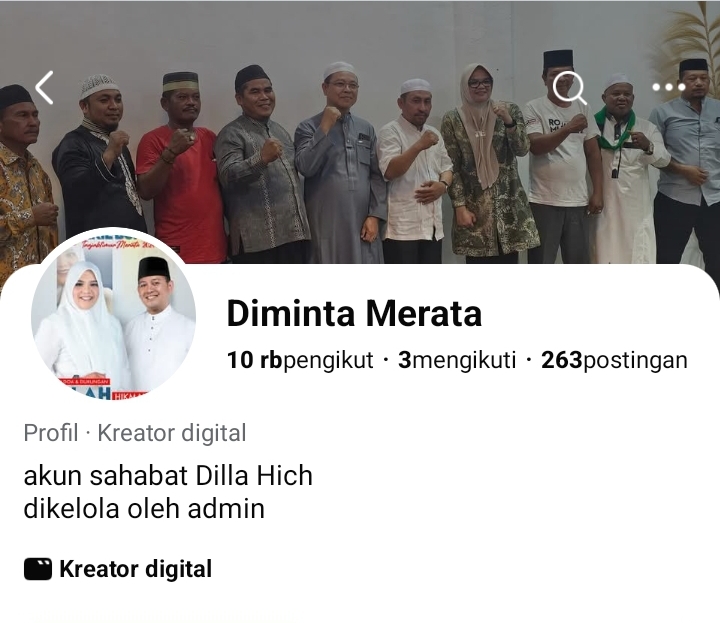
The name "Diminta Merata" is itself a deliberate semiotic construction: "Diminta" functions as an acronym for Dillah-Muslimin Tanja, while "Merata" stands for Membangun Bersama Rakyat Sejahtera dan Bahagia (Building Together for a Prosperous and Happy People). Beyond simply identifying the page, this name operates as a political sign encapsulating the campaign's central idea—development that is fair, comprehensive, and oriented toward community welfare, consistent with Barthes' (1968) claim that signs in mass communication carry meaning beyond their literal, denotative function.
Between July and December 2024, the page published 121 pieces of visual content and 86 videos—207 posts in total across six months, averaging more than one upload per day. With roughly 10,000 followers, the page recorded an average of 5,000 views and 3,000 likes per post, engagement figures well above what is typical for district-level regional election campaign pages. These figures corroborate Vergeer et al.'s (2013) finding that posting consistency and frequency are central to sustaining digital momentum during a campaign, and the sheer density of planned content suggests the Dilla-Muslimin team pursued a structured, data-driven communication strategy rather than relying on improvisation.
Semiotic Analysis of Campaign Content: Denotative and Connotative Meaning
Applying Barthes' semiotic framework to the "Diminta Merata" Facebook page reveals a deliberate, layered construction of meaning. At the denotative level, the content conveys factual information—photographs of the candidates, activity locations, program narratives, and voter demographic data. At the connotative level, however, which is where Barthes' method is most revealing, each visual and verbal element carries far deeper and more complex significance.
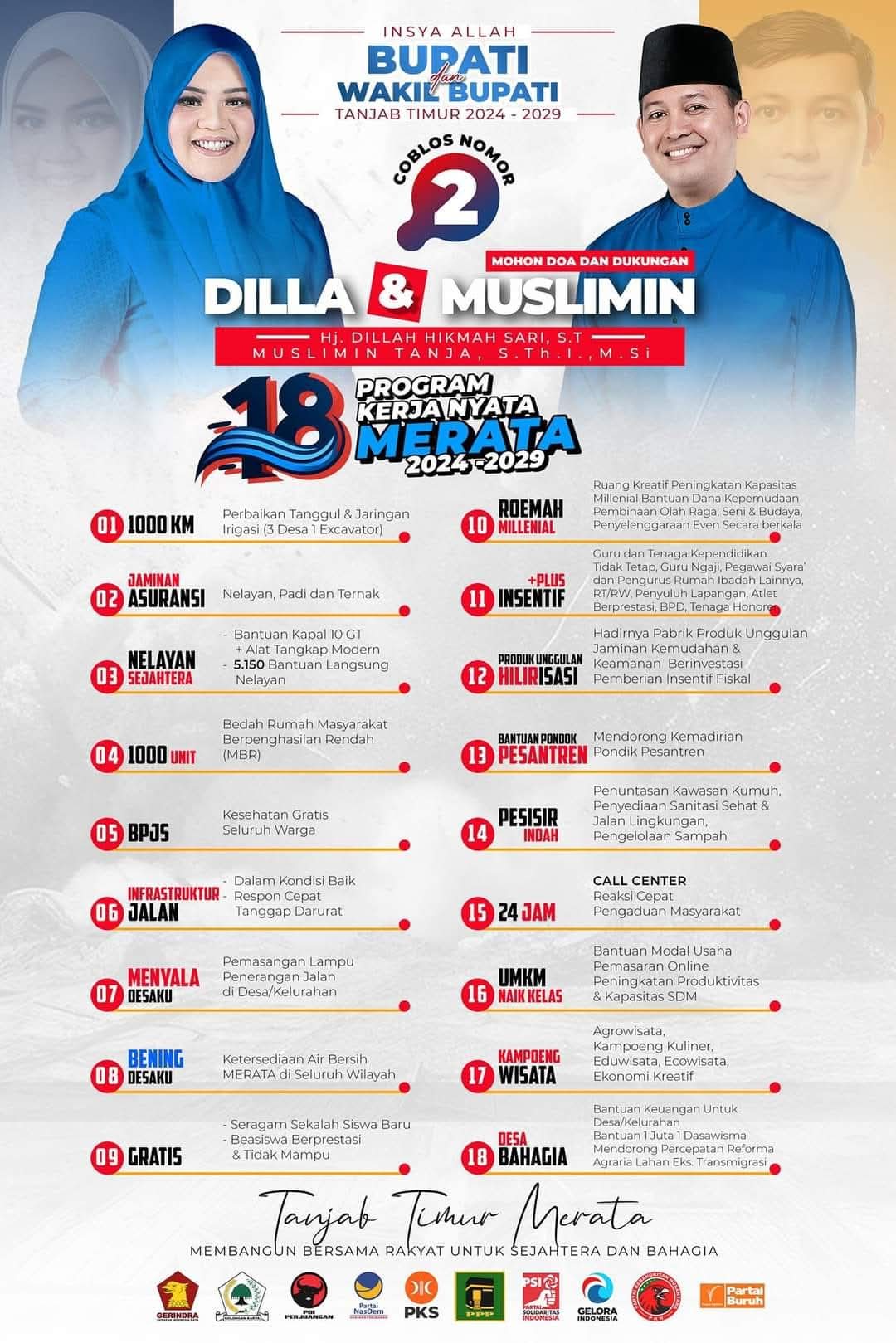
Photography stands out as one of the most prominent semiotic elements in the campaign. Denotatively, the photographs on the "Diminta Merata" page simply show Dillah Hikmah Sari and Muslimin Tanja in various activities. Connotatively, however, the choice of angle, facial expression, gesture, and background in each image conveys deliberate messages: smiling expressions and open gestures signal openness and approachability; images set among crowds of citizens suggest societal acceptance and popular support; and photographs at infrastructure sites or during productive activities convey leadership capability and competence. Far from incidental, these choices reflect a systematic image-building strategy, echoing Arifin's (2011) argument that political image is shaped by the information audiences receive, whether directly or through media.
Verbal elements—narrative texts, slogans, and hashtags—carry an equally significant connotative charge. Denotatively, the slogan "Membangun Bersama Rakyat Sejahtera dan Bahagia" (Building Together for a Prosperous and Happy People) simply announces a development orientation; connotatively, it projects a vision of participatory leadership centered on ordinary people rather than elites. Word choices such as "bersama" (together) and "rakyat" (the people) strategically frame Dilla-Muslimin as opponents of oligarchy and centralized power. Given Tanjung Jabung Timur's history of uneven development across sub-districts, this slogan's connotative resonance carries particular weight with voters (Cahyono, 2020; Susanto, 2013).
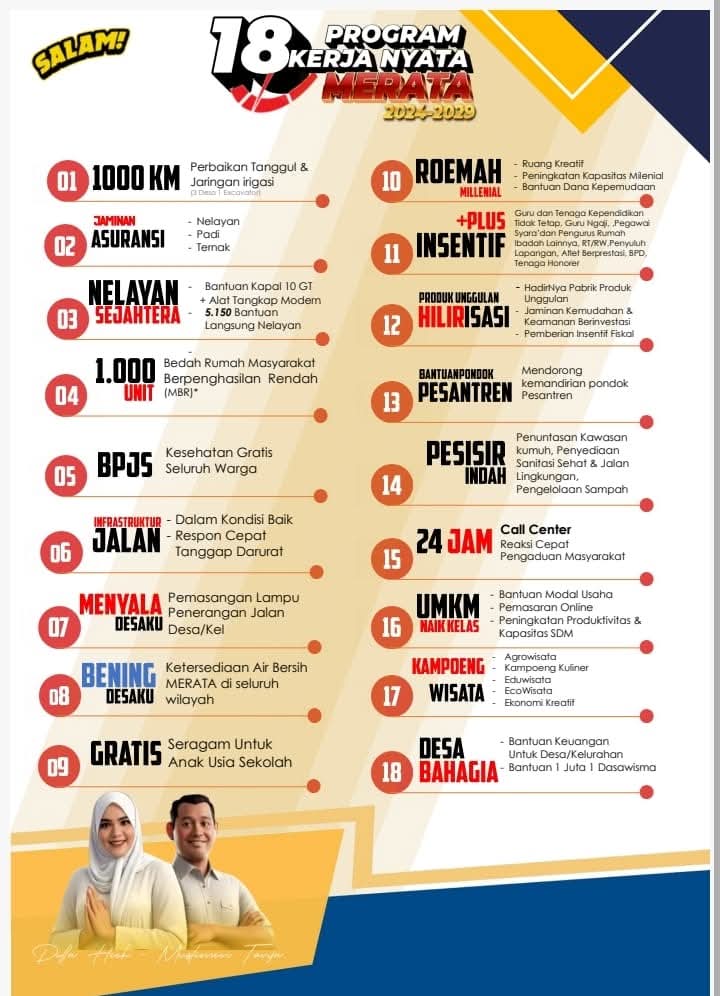
Source: https://www.Facebook.com/DimintaMerata
The hashtag #Merata stands as perhaps the most influential semiotic device within the Dilla-Muslimin campaign's digital presence. Denotatively, "merata" simply means evenly distributed, not concentrated in any one area; connotatively, however, it carries collective aspirations for equitable development, fair public service, and balanced attention across all of Tanjung Jabung Timur. Read through Barthes' framework, #Merata operates as a political myth, converting a specific claim—the promise of equitable development—into a seemingly universal value of justice and welfare. Its consistent use across every post produces a digital intertextuality that reinforces voters' collective recollection of Dilla-Muslimin's political vision (Chandler, 2006; Vera, 2014).
The 18 Real Action Programs (Merata) promoted through the Facebook page carry their own semiotic weight. Denotatively, the number 18 simply indicates how many programs exist; connotatively, it signals seriousness, preparedness, and thorough planning, standing in contrast to the vague promises typical of many campaigns. Concrete initiatives such as 1,000 KM of embankment repair, insurance for fishermen and farmers, and assistance with 10 GT vessels serve as tangible signs constructing an image of leaders attuned to the real needs of Tanjung Jabung Timur's coastal communities—an approach that, per Fatimah (2018), builds voter trust far more effectively than general rhetoric.
Lasswell's Communication Model Analysis of the Dilla-Muslimin Digital Campaign
Mapping the Dilla-Muslimin digital campaign onto Harold D. Lasswell's communication model produces a comprehensive picture of the political communication process at work. The Lasswell formula—Who says What in Which Channel to Whom with What Effect—offers an analytical structure for systematically tracing the full chain of campaign communication (Mulyana, 2007), and each of its five elements can be clearly identified within the "Diminta Merata" Facebook page.
The Who (communicator) refers to the volunteers and winning team behind the Dilla-Muslimin pair, who produced the campaign's messages. Relying on volunteers rather than official party or bureaucratic communicators carries strategic significance, projecting the image of a grassroots movement that voters find more authentic and trustworthy. Norris and Inglehart (2019) similarly find that messages delivered by ordinary citizens (peers) tend to carry greater credibility than official messages from candidates or parties. The Say What (message) covers all published content—introducing the candidates, narrating the 18 work programs, calling for votes, building a positive image, and responding to current issues—packaged in visual and verbal formats suited to Facebook's platform characteristics.
The In Which Channel (channel) element centers on the "Diminta Merata" Facebook page as the primary platform, supported by the secondary page "Sahabat Dilla Muslimin." Facebook was selected as the main channel based on data showing high usage in Tanjung Jabung Timur, where 41.4 percent of residents rely on it for political information. The To Whom (receiver) element refers to the Tanjung Jabung Timur community—particularly prospective voters, digitally literate young people, and occupational groups such as fishermen, farmers, and livestock breeders who were targeted by Dilla-Muslimin's specific programs. This clear audience segmentation allowed the team to produce more targeted, relevant content, strengthening overall communication effectiveness (Cangara, 2016). Finally, the With What Effect element concerned the intended outcome—building a positive image for Dilla-Muslimin, boosting voter support, and ultimately winning the election—an outcome that materialized when the pair secured 58.63 percent of the vote, evidence of their digital communication strategy's effectiveness.
Data-Based Content Production Strategy
Among the Dilla-Muslimin campaign team's competitive strengths was its commitment to grounding content production in scientific data rather than improvisation or intuition alone. Every piece of campaign content published on social media was anchored in concrete analysis of on-the-ground realities, drawing on field research findings and ongoing monitoring of issues emerging online. This approach reflects a core principle of modern political communication—the emphasis on evidence-based messaging to build voter trust (Perloff, 2021).
Within the winning team, every division held an equal say in assessing developments, shaping discourse, and defining the overall campaign theme. This egalitarian structure fostered a more open flow of information and more responsive decision-making amid shifting field conditions. Sobur (2013) describes media studies as, at its core, the study of meaning—its origins, its form, its purpose, how it is delivered, and how audiences interpret it—and within this framework, the Dilla-Muslimin production team effectively embedded semiotic principles into its everyday campaign work, treating every post as a deliberate, meaningful sign rather than information conveyed haphazardly.
Combining offline and online campaigning proved to be another strategic element behind the Dilla-Muslimin campaign's effectiveness. The winning team recognized that Facebook alone could not secure victory; it needed to work in tandem with face-to-face activities, volunteer networks, and grassroots community engagement. Cangara (2014) argues that effective campaigns integrate multiple communication channels—online and offline alike—into a single, cohesive strategy, and the "Diminta Merata" Facebook page served precisely this function, digitally amplifying physical campaign activities by documenting, semiotically framing, and disseminating each field event to a wider audience.
The final results of the 2024 Tanjung Jabung Timur Regional Election offer empirical confirmation of the Dilla-Muslimin digital campaign strategy's effectiveness. Securing 81,585 votes (58.63 percent) against the Zumi Laza–Muhammad Aris pair's 57,564 votes (41.37 percent) demonstrates that a social media-based communication strategy, underpinned by sound semiotic analysis, can deliver a meaningful competitive edge in local electoral contests—consistent with Gibson and McAllister's (2011) argument that strategic, sustained social media use can meaningfully shape candidate vote share, particularly among young, digitally literate voters who increasingly make up a large share of Indonesia's electorate.
Discussion
Taken together, the findings above address the two questions this study set out to answer. First, the layered semiotic reading of the "Diminta Merata" Facebook page shows that denotative content—photographs, program lists, and factual narration—was consistently paired with a connotative register built around fairness, closeness, and competence, most visibly condensed in the name "Diminta Merata" and the hashtag #Merata. Second, mapping the same content onto Lasswell's model shows that this meaning-construction was not incidental but embedded in a deliberate communication chain, from volunteer-driven authorship through audience-segmented messaging to the intended electoral effect. Read side by side, the two analytical layers reinforce one another: Barthes' framework explains how the campaign's signs generated meaning, while Lasswell's model explains how that meaning was organized, channeled, and directed toward a specific electorate, giving a fuller account of the campaign's communication logic than either framework would offer on its own.
These findings are largely consistent with prior research on candidate social media use, while also extending it in a specific direction. In line with Vergeer et al. (2013) and Gibson and McAllister (2011), a high-frequency, authentic, and locally grounded posting pattern coincided with a favorable electoral outcome for Dilla-Muslimin, and the volunteer-driven "grassroots" framing of the page echoes Norris and Inglehart's (2019) observation that peer-delivered messages tend to carry greater credibility than official candidate communication. At the same time, most existing Indonesian studies on digital campaigning concentrate on national-level, presidential, or legislative contests (Adinugroho et al., 2019; Harisah, 2019), leaving the semiotic dynamics of district-level elections comparatively unexamined. The present analysis suggests that the same connotative mechanisms identified in national campaigns—myth-making, image construction, and hashtag-driven intertextuality (Barthes, 1972; Chandler, 2006)—also operate at the regional level, but are adapted to local concerns such as coastal livelihoods, uneven sub-district development, and occupational identities (fishermen, farmers, and livestock breeders). This suggests that Barthes' semiotic model travels well across levels of government, provided the connotative content is anchored in issues that carry direct local resonance rather than generic national themes.
The results also carry practical implications for campaign teams operating with the limited budgets typical of regional elections. Because Facebook's interactive features allow a viral, low-cost multiplication of reach through likes, shares, and comments (Schroder, 2004; Cahyono, 2020), semiotically consistent content appears able to substitute, at least partially, for the paid media budgets available to better-resourced national campaigns. The pairing of online semiotic messaging with offline, face-to-face activity—consistent with Cangara's (2014) argument for integrated campaign channels—further suggests that digital semiotics is most effective not as a stand-alone strategy but as an amplifier of a campaign's ground presence. For practitioners, this points to a replicable model: a single, memorable political sign (such as "Diminta Merata"), sustained through consistent posting and reinforced by field activity, rather than fragmented or improvised messaging.
Several limitations should nonetheless be acknowledged. As a single-case, qualitative study, the analysis cannot establish a causal relationship between the semiotic strategy documented here and the 58.63 percent vote share obtained by Dilla-Muslimin; the electoral outcome is treated as corroborating rather than proving the strategy's effectiveness, since other factors—candidate track record, local political alliances, and offline mobilization—plausibly also contributed. The reliance on documentation and unstructured interviews with the winning team, rather than direct evidence of voter interpretation, means the connotative meanings identified reflect the analyst's and campaign team's reading of the signs rather than a confirmed audience reception. The findings are also bounded by a single platform (Facebook) and a single regional context, which limits generalization to campaigns run primarily on other platforms or in areas with different levels of internet penetration. These limitations point directly to the avenues for future research already noted in the concluding section below, particularly the value of cross-platform and voter-reception studies that could test whether the connotative meanings identified here were, in fact, the meanings voters took away.
Conclusion
This study has shown that semiotically informed social media campaigning represents an effective political communication strategy within the context of Indonesia's district- and city-level regional elections. Through Barthes' semiotic analysis of the "Diminta Merata" Facebook page, the Dilla-Muslimin campaign team is found to have built a deliberate, layered construction of meaning in every post, combining denotative elements—factual information about programs and candidates—with connotative dimensions projecting people-centered, fair, and competent leadership. This semiotic consistency, paired with high-frequency, data-driven content production, generated a digital ecosystem that effectively shaped voter perception and encouraged participation.
Three findings from this study deserve particular attention. First, the name and hashtag "Diminta Merata" operate as a political sign that compresses the entire campaign narrative into one memorable symbol, skillfully merging the candidate pair's identity with their development vision. Second, combining online (Facebook) and offline (field) campaigning generated a synergy that amplified both the reach and impact of campaign messages. Third, grounding content production in scientific data rather than improvisation kept messages closely tied to the real needs of the Tanjung Jabung Timur community, producing strong emotional resonance among voters.
This study contributes theoretically to digital political communication scholarship at the local level, an area still underexplored within Indonesian academic literature, while offering practical guidance for candidates and campaign teams seeking to design semiotically and data-informed digital communication strategies for regional electoral contests. Future research might extend this analysis to other platforms such as Instagram, TikTok, and YouTube, and examine the quantitative relationship between digital campaign intensity and vote outcomes across different districts and cities in Indonesia, contributing to a fuller understanding of digital political communication in the era of Indonesia's evolving digital democracy.
Bibliography
Adinugroho, B., Prisanto, G. F., Irwansyah, I., & Ernungtyas, N. F. (2019). Media Sosial Dan Internet Dalam Keterlibatan Informasi Politik Dan Pemilihan Umum. Representamen, 5(02). https://doi.org/10.30996/representamen.v5i02.2943
Arifin, A. (2011). Komunikasi Politik: Filsafat, Paradigma, Teori, Tujuan, Strategi, dan Komunikasi Politik Indonesia. Graha Ilmu.
Barthes, R. (1968). Elemen-Elemen Semiologi (M. Ardiansyah, Terjemahan). Basabasi.
Barthes, R. (1972). Mythologies (A. Lavers, Trans.). Hill and Wang.
Blumler, J. G., & Kavanagh, D. (1999). The Third Age of Political Communication: Influences and Features. Political Communication, 16(3), 209–230.
Budiarsa, Y. T., & Pandiangan, A. (2022). Komunikasi Politik di Masa Pandemi: Analisis Isi Unggahan Instagram mengenai Program Pengendalian COVID-19 dan Pemulihan Ekonomi. Jurnal Studi Komunikasi Dan Media, 26(2), 123–138. https://doi.org/10.17933/jskm.2022.4865
Cahyono, A. S. (2020). Pengaruh Media Sosial terhadap Perubahan Sosial Masyarakat di Indonesia. Publiciana, 5(2), 202–225. https://doi.org/10.32923/asy.v5i2.1586
Cangara, H. (2014). Komunikasi Politik: Konsep, Teori, dan Strategi (Edisi Revisi). RajaGrafindo Persada.
Cangara, H. (2016). Pengantar Ilmu Komunikasi (Edisi Ketiga). RajaGrafindo Persada.
Chadwick, A. (2013). The Hybrid Media System: Politics and Power. Oxford University Press.
Chadwick, A., & Howard, P. N. (2009). Routledge Handbook of Internet Politics. Routledge.
Chandler, D. (2006). Semiotics: The Basics (2nd ed.). Routledge.
Creswell, J. W. (2009). Research Design: Qualitative, Quantitative, and Mixed Methods Approaches. SAGE Publications.
Denzin, N. K., & Lincoln, Y. S. (2009). Handbook of Qualitative Research. Pustaka Pelajar.
Eco, U. (1976). A Theory of Semiotics. Indiana University Press.
Enli, G. S., & Skogerbø, E. (2013). Personalized Campaigns in Party-Centred Politics: Twitter and Facebook as Arenas for Political Communication. Information, Communication & Society, 16(5), 757–774. https://doi.org/10.1080/1369118X.2013.782330
Fatimah, S. (2018). Kampanye sebagai Komunikasi Politik: Esensi dan Strategi dalam Pemilu. Resolusi: Jurnal Sosial Politik, 1(1), 5–16. https://doi.org/10.32699/resolusi.v1i1.154
Fiske, J. (2007). Introduction to Communication Studies (3rd ed.). Routledge.
Gibson, R., & McAllister, I. (2011). Do Online Election Campaigns Win Votes? The 2007 Australian YouTube Election. Political Communication, 28(2), 227–244. https://doi.org/10.1080/10584609.2011.568042
Harisah, M. (2019). Pemanfaatan Facebook Sebagai Media Kampanye Politik Jokowi–JK pada Pilpres 2014. KAREBA Jurnal Ilmu Komunikasi, 8(1).
Hasfi, N. (2019). Komunikasi Politik di Era Digital. FISIP UNDIP Press.
Holmes, D. (2005). Communication Theory: Media, Technology, and Society. SAGE Publications.
Kertanegara, M. R. (2019). Strategi Komunikasi Visual Online Akun Instagram @Rindujabarjuara pada Pilkada Jawa Barat 2018. Prosiding Comnews, 1, 130–140.
Loader, B. D., & Mercea, D. (2011). Networking Democracy? Social Media Innovations and Participatory Politics. Information, Communication & Society, 14(6), 757–769. https://doi.org/10.1080/1369118X.2011.592648
McNair, B. (2017). An Introduction to Political Communication (6th ed.). Routledge.
Mulyana, D. (2007). Ilmu Komunikasi: Suatu Pengantar. Remaja Rosdakarya.
Norris, P. (2001). Digital Divide: Civic Engagement, Information Poverty, and the Internet Worldwide. Cambridge University Press.
Norris, P., & Inglehart, R. (2019). Cultural Backlash: Trump, Brexit, and Authoritarian Populism. Cambridge University Press.
Nugrahani, F. (2014). Metode Penelitian Kualitatif dalam Penelitian Pendidikan Bahasa. Cakra Books.
Perloff, R. M. (2021). The Dynamics of Political Communication: Media and Politics in a Digital Age (3rd ed.). Routledge.
Ruben, B. D. (1998). Communication and Human Behavior (4th ed.). Allyn and Bacon.
Schroder, K. C. (2004). The Internet as a Political Public Sphere? Challenges and Possibilities. Javnost – The Public, 11(1), 45–62.
Sjoraida, D. F., Dewi, R., Adi, A. N., & Dipa, A. K. (2021). Penggunaan media sosial dalam membangun reputasi anggota legislatif di Jawa Barat. Profesi Humas Jurnal Ilmiah Ilmu Hubungan Masyarakat, 6(1), 89. https://doi.org/10.24198/prh.v6i1.32112
Sobur, A. (2013). Semiotika Komunikasi. Remaja Rosdakarya.
Subiakto, H. (2013). Internet untuk pedesaan dan pemanfaatannya bagi masyarakat. Masyarakat, Kebudayaan Dan Politik, 26(4).
Susanto, E. H. (2013). Dinamika Komunikasi Politik Dalam Pemilihan Umum. Jurnal Kajian Komunikasi, 1(2), 163–172. https://doi.org/10.24198/jkk.vol1n2.6
Vera, N. (2014). Semiotika dalam Riset Komunikasi. Ghalia Indonesia.
Vergeer, M., Hermans, L., & Sams, S. (2013). Online Social Networks and Micro-Blogging in Political Campaigning: The Exploration of a New Campaign Tool and a New Campaign Style. Party Politics, 19(3), 477–501. https://doi.org/10.1177/1354068811407580
We Are Social & Hootsuite. (2024). Digital 2024: Indonesia. https://datareportal.com/reports/digital-2024-indonesia
Wekke, I. S., dkk. (2019). Metode Penelitian Sosial. Angewandte Chemie International Edition.
Yin, R. K. (2018). Case Study Research and Applications: Design and Methods. SAGE Publications